

How to Lower Blood Pressure Naturally A Practical Guide
Taking control of your blood pressure is one of the most empowering things you can do for your long-term health, and you can absolutely do it naturally. It often boils down to a few powerful, interconnected changes: adopting a heart-healthy diet, moving your body consistently, and learning to manage your stress.
These aren't just empty suggestions; they are small but mighty habits that work together to make a real, measurable difference in your cardiovascular health.
Your Action Plan for Natural Blood Pressure Management
High blood pressure, or hypertension, is tricky. It usually develops without any obvious symptoms, but its impact can be serious. Before we jump into the specific strategies, it helps to understand what’s happening under the hood. For a great deep dive, check out this guide on what causes high blood pressure and its impact on longevity. It really clarifies the mechanics behind the numbers.
Think of this guide as your practical roadmap. This isn't about making drastic, unsustainable changes overnight. It's about taking manageable steps that build on each other, giving you a remarkable degree of influence over your own well-being.
The chart below shows just how powerful these natural methods can be. Diet, exercise, and stress reduction are the heavy hitters.
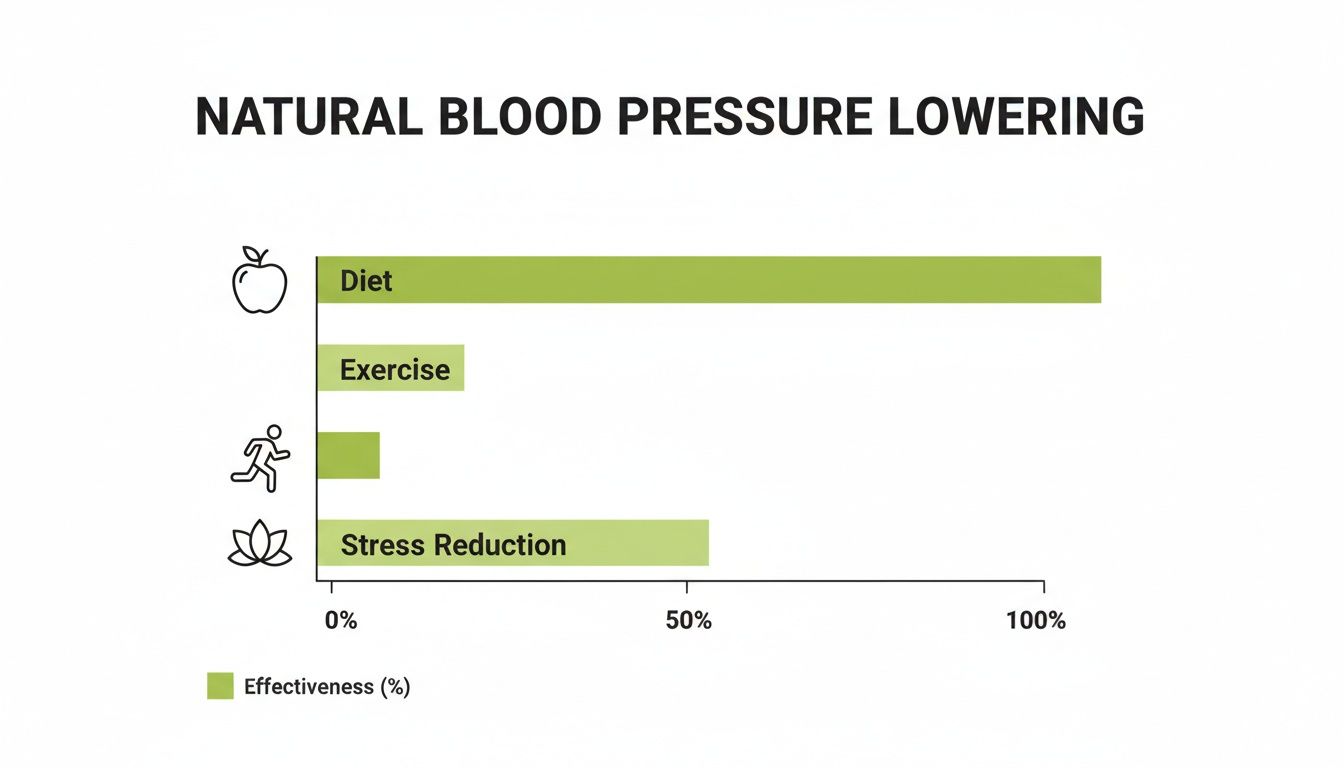
As you can see, these three pillars form the very foundation of managing your blood pressure without medication, each playing a huge role in your success.
Key Pillars of Natural Management
The core of this approach really rests on a few key areas. By focusing your energy here, you'll get the most bang for your buck without feeling totally overwhelmed.
Adopt a Heart-Healthy Diet: This is about so much more than just cutting out salt. It’s about flooding your body with potassium-rich foods like fruits and vegetables, choosing whole grains, and sticking with lean proteins.
Embrace Regular Physical Activity: Consistency beats intensity every time. Simple activities like a brisk walk, a swim, or a bike ride strengthen your heart, making it a more efficient pump.
Manage Stress Effectively: We can't ignore this one. Chronic stress is a major, often overlooked, driver of high blood pressure. Techniques that calm your nervous system are non-negotiable. To really understand this link, read our guide on stress and its impact on heart health.
Your daily habits—what you eat, how you move, and how you respond to stress—are the most powerful tools you have for managing your blood pressure naturally. Start with one small change today.
Here’s a quick look at what you can expect from these key lifestyle adjustments.
Key Natural Strategies And Their Impact On Blood Pressure
Strategy | Typical Systolic BP Reduction (mm Hg) | Timeframe for Results |
|---|---|---|
DASH Diet | 8–14 mm Hg | 2-4 weeks |
Weight Loss | 5–10 mm Hg per 10 kg lost | 1-3 months |
Sodium Reduction | 5–6 mm Hg | Within a few weeks |
Regular Exercise | 5–8 mm Hg | 1-3 months |
Limit Alcohol | 4 mm Hg | 2-4 weeks |
Stress Reduction | 5-10 mm Hg | Immediate (acute), sustained with practice |
This table gives you a realistic snapshot of how powerful these natural interventions can be. By layering these habits, you can achieve significant, lasting improvements in your blood pressure and overall health.
Building Your Heart-Healthy Plate
Let's be clear: changing what you eat is probably the single most powerful thing you can do to lower your blood pressure without medication. This isn't about bland, restrictive meals. It's about being strategic and loading your plate with foods that actively help your body relax your blood vessels and keep your heart strong.
The right foods don't just prevent problems—they give your body the exact tools it needs to find and maintain a healthy equilibrium.
The Power of Proven Eating Patterns
When it comes to research, two approaches consistently come out on top for blood pressure control: the DASH diet and the Mediterranean diet. They’re built on the same foundation of whole, unprocessed foods.
The DASH (Dietary Approaches to Stop Hypertension) diet isn't some fleeting trend. It's a clinically proven plan designed specifically to tackle high blood pressure. Studies have shown that focusing on fruits, vegetables, and low-fat dairy can lower systolic BP by up to 11 mm Hg—a result that rivals some medications. Its magic lies in boosting minerals like potassium, calcium, and magnesium, which help your blood vessels chill out.
Likewise, the Mediterranean diet zeroes in on fish, olive oil, fruits, veggies, nuts, and whole grains. It’s loaded with healthy fats and antioxidants that protect your blood vessels from the kind of damage and inflammation that drive up pressure. For a deeper look, here's a practical guide to a heart-healthy diet plan.
Key Nutrients and Where to Find Them
So, why do these diets work so well? It all comes down to a few key nutrients that are absolute superstars in regulating blood pressure.
Potassium: Think of this as sodium's natural counterbalance. Potassium tells your kidneys to flush out excess sodium and helps ease the tension in your blood vessel walls. Load up on bananas, avocados, sweet potatoes, spinach, and beans.
Magnesium: This is basically a natural relaxant for your body, and that includes your blood vessels. When they're relaxed, blood flows much more easily. You'll get a good dose from leafy greens, almonds, dark chocolate, and black beans.
Fiber: Found in all the good stuff—whole grains, fruits, veggies, and legumes—fiber does more than just keep you regular. It’s consistently linked to lower blood pressure and better heart health. An easy win? Start your day with oatmeal or toss some lentils into your next soup.
My advice is always to focus on small, consistent swaps instead of a radical, overnight overhaul. It's much more sustainable. Try adding a side of steamed spinach to dinner or trading your usual afternoon chips for a handful of unsalted almonds and an apple.
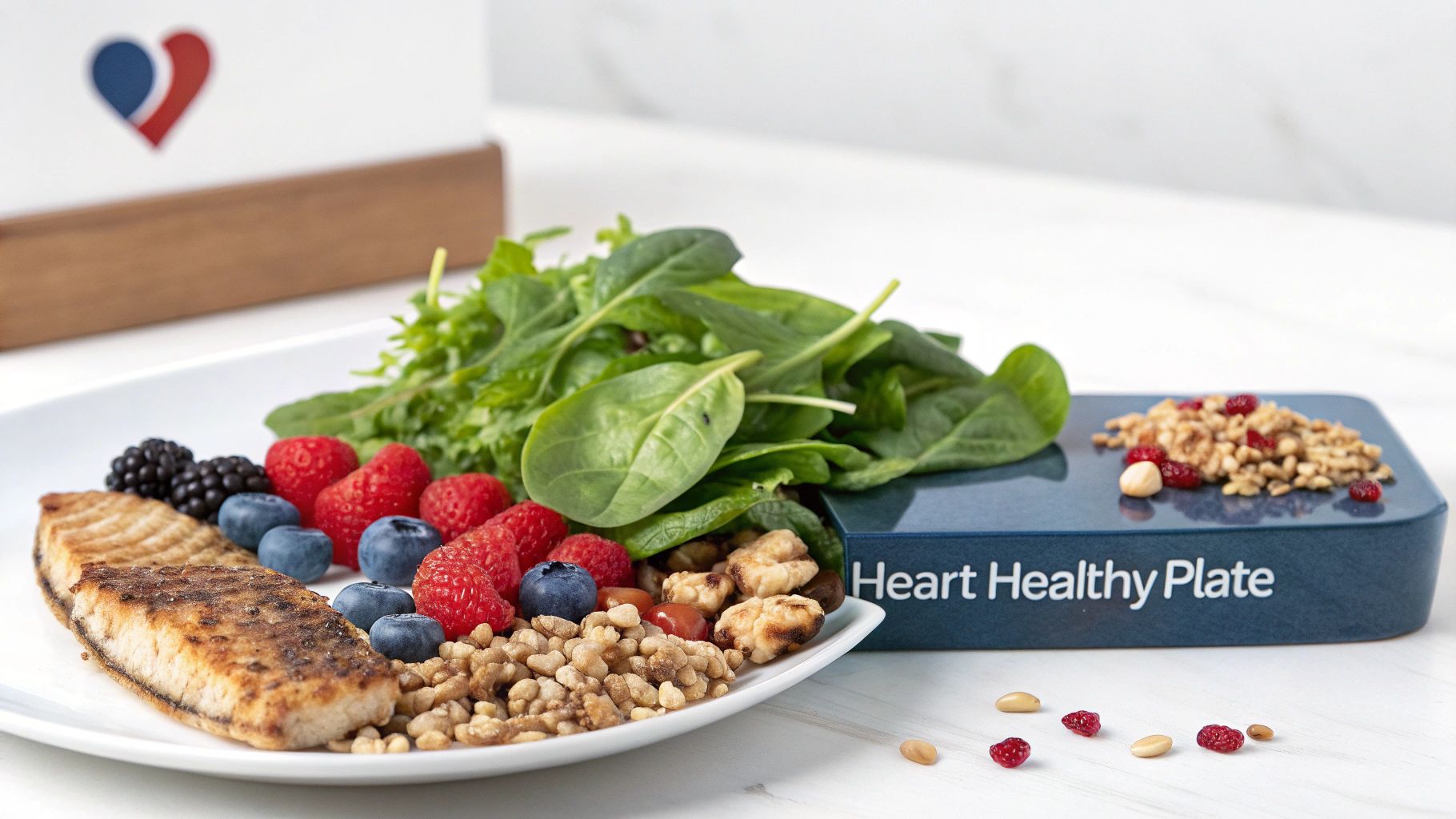
The goal is simple: prioritize real, whole foods and dial back the sodium, sweets, and red meat. It’s a powerful formula for taking back control of your numbers.
Foods With Unique Blood Pressure Benefits
Beyond the core minerals, some foods contain unique compounds that give you an extra edge. Weaving these into your meals can really amplify your efforts.
Fatty fish like salmon, mackerel, and sardines, for example, are packed with Omega-3 fatty acids. These healthy fats are famous for taming inflammation and have been shown to lower blood pressure, particularly for people who already have hypertension. Aiming for at least two servings a week is a great target.
Beets are another game-changer. They are loaded with dietary nitrates, which your body cleverly converts into nitric oxide. This molecule is a potent vasodilator—a fancy way of saying it opens up your blood vessels, which dramatically improves blood flow and drops pressure. A daily glass of beet juice or some roasted beets in a salad can make a real difference.
And don't overlook garlic. It contains a compound called allicin, which also helps boost nitric oxide production, letting your arteries relax. Pro tip: crush or chop fresh garlic and let it sit for a few minutes before you cook it. This simple step helps activate its beneficial compounds.
Ultimately, building a heart-healthy plate is a journey of delicious discovery, not deprivation.
The Sodium and Potassium Balancing Act
When you start looking into how to lower blood pressure naturally, the conversation almost always kicks off with salt. But here's the thing: just focusing on what you cut out is only half the picture.
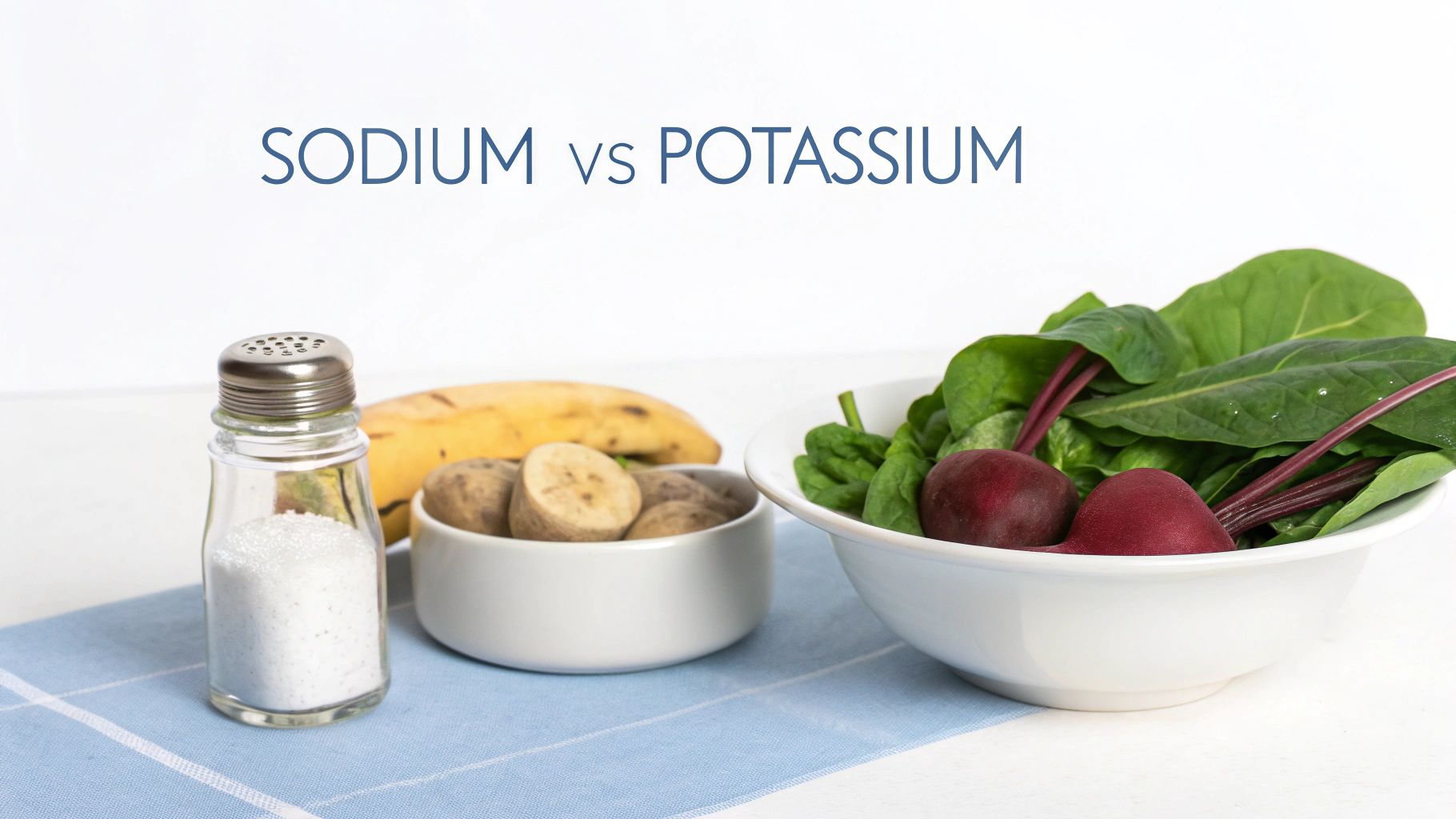
The real magic happens in the delicate dance between two key minerals: sodium and potassium. Picture them as two sides of a scale.
Too much sodium makes your body cling to water, which increases the amount of fluid pumping through your bloodstream. All that extra volume pushes against your blood vessel walls, driving your pressure up. Potassium, on the other hand, does the complete opposite. It helps your body get rid of excess sodium and also eases tension directly in your blood vessel walls, helping everything relax. Getting this balance right is a genuine game-changer.
Uncovering Hidden Sodium in Your Diet
First thing's first: you need to become a bit of a detective. Most of the sodium we eat—over 70% of it—doesn't even come from the salt shaker on the table. It's hiding in processed and packaged foods, where it's used as a preservative and, of course, a flavor booster.
You'd be shocked where it turns up. Common culprits include:
Soups and Canned Goods: A single can of soup can easily pack more than half of your recommended daily sodium.
Processed Meats: Think deli meats, bacon, and sausages. They're all notoriously high in sodium.
Frozen Meals: Convenience often comes at a steep price for your blood pressure.
Bread and Rolls: They might not taste salty, but the sodium adds up fast if you eat several servings a day.
Learning to read food labels is your best defense. Look for "Sodium" on the Nutrition Facts panel and try to stick to foods with a Daily Value (%DV) of 5% or less per serving. Anything over 20% is definitely in the high zone.
Making Smart Swaps at Home and When Dining Out
It's a lot easier to control sodium when you're cooking at home. Instead of reaching for salt, get creative with other flavors. Garlic powder (not garlic salt!), onion powder, paprika, herbs like rosemary and thyme, and even a squeeze of citrus can add incredible taste without a single grain of extra sodium.
Eating out is more of a challenge, but it's not impossible.
Check the menu online first. Many restaurants now post their nutritional info.
Ask for your meal to be prepared without added salt. It’s a simple request that can make a huge impact.
Get sauces and dressings on the side. This puts you in the driver's seat.
Here’s a simple mindset shift that can make all the difference: Instead of thinking about what you need to avoid, focus on what you can add. Every time you add a potassium-rich food to your plate, you're actively helping your body find its balance again.
The Rise of Potassium-Enriched Salt Substitutes
The relationship between sodium and potassium is so crucial that it has sparked some pretty exciting developments. We know that reducing sodium is a cornerstone strategy for preventing cardiovascular disease worldwide. Now, studies on swapping regular salt for reduced-sodium alternatives enriched with potassium have shown incredible results.
This simple switch has been linked to a 14% lower risk of stroke, a 13% reduction in major cardiovascular events, and a 12% drop in premature death. And it did all this without increasing the risk of high potassium levels (hyperkalemia) in the general population. These findings really drive home how significant this mineral balance is for heart health. You can read more about the global impact of sodium reduction from this study.
This doesn't mean you should start loading up on salt substitutes without a second thought. If you have kidney problems or are on certain medications, you absolutely must talk to your doctor first, as your body might not be able to handle the extra potassium. For many people, though, it can be a smart and effective part of their overall plan.
Ultimately, balancing sodium and potassium isn’t about being perfect. It's about making consistent, mindful choices that support your cardiovascular system, day in and day out.
Using Movement and Mindfulness to Your Advantage
Your diet is a powerful lever for blood pressure control, but it's only one piece of the puzzle. How you move your body and manage your mind are just as critical. These two work together to build a resilient cardiovascular system, tackling both the physical and neurological drivers of high blood pressure.
This image really says it all—finding a peaceful space to be active strengthens both body and mind. It’s a synergy that’s absolutely key to naturally lowering blood pressure.
Strengthen Your Heart with Regular Exercise
Think of your heart as a muscle. Just like any other muscle, it gets stronger and more efficient when you train it. When you do aerobic exercise—anything that gets your heart rate up—you’re giving your heart a fantastic workout.
A stronger heart can pump more blood with less effort. This directly translates to less force being pushed against your arteries with each beat, which is exactly what lower blood pressure is. It's a simple, powerful physiological response.
You don't need to become a marathon runner overnight. In fact, consistency is way more important than intensity. The sweet spot for most people is at least 150 minutes of moderate-intensity aerobic activity each week.
Finding an Exercise You Actually Enjoy
This is probably the most important part of building a routine that sticks. If you dread your workout, you simply won't do it for long. The best exercise is always the one you’ll actually do.
Here are a few effective options that don't feel like a chore:
Brisk Walking: A 30-minute walk, five days a week, is a fantastic and super accessible starting point.
Cycling: Whether you're hitting the trails or using a stationary bike, this is a great low-impact option that’s easy on the joints.
Swimming: The water provides gentle resistance and supports your body, making it ideal for just about everyone.
Dancing: Put on your favorite playlist and just move. It's an amazing way to get your heart pumping without feeling like you're "working out."
Remember, every minute of movement adds up. If you can't carve out a full 30-minute session, don't sweat it. Three 10-minute walks scattered throughout the day are just as effective and can be much easier to fit into a busy schedule.
The science is crystal clear on this: combining physical activity with stress reduction leads to significant drops in blood pressure. Getting at least 150 minutes of aerobic exercise weekly can lower systolic blood pressure by an average of 5 to 8 mm Hg. This comprehensive review dives deep into these non-dietary interventions.
Calming Your Nervous System to Lower Pressure
While exercise works on the physical mechanics, mindfulness tackles the mental and emotional side. Chronic stress keeps your body locked in a "fight or flight" state, pumping out stress hormones like cortisol and adrenaline. These hormones constrict your blood vessels and speed up your heart rate—a direct recipe for high blood pressure.
Mindfulness practices, especially specific breathing exercises, are like hitting the emergency brake on that stress response. They activate your parasympathetic nervous system, your body's "rest and digest" mode. This tells your body the danger has passed, letting your heart rate slow, your muscles relax, and your blood vessels open up.
This isn't just about feeling calm; it's about creating a real, measurable physiological change.
Harnessing Technology for Mindful Breathing
It can be tough to know if you're doing these breathing techniques correctly at first. This is where modern tools can be a game-changer by giving you tangible, real-time feedback.
Apps like Mindbreath use your phone's camera to measure your Heart Rate Variability (HRV). HRV is a powerful metric that shows how balanced your nervous system is and how resilient you are to stress. By watching your HRV respond as you breathe, you get immediate confirmation that the technique is working.
This biofeedback helps you master highly effective methods like resonant frequency breathing—a specific pace of about 5-6 breaths per minute that maximizes your HRV and profoundly calms your nervous system. Seeing the numbers change on your screen turns an abstract wellness practice into a concrete, data-driven skill. If you want to see an immediate impact, you can learn how to lower blood pressure fast in minutes with breathing exercises.
By pairing consistent movement with targeted mindfulness, you create a powerful one-two punch to lower your blood pressure naturally and build a healthier, more resilient you.
Once you've got your diet and exercise dialed in, it's time to look at the other pieces of the puzzle. A few key lifestyle habits can either supercharge your efforts or quietly sabotage them.
Things like managing your weight, how much you drink, the quality of your sleep, and even certain supplements play a massive role. Think of them as amplifiers. Getting these right can make a huge difference in pushing your numbers down into a healthier zone for good.
The Direct Link Between Weight and Pressure
Carrying extra weight puts a constant strain on your heart and blood vessels. It’s simple physics: your heart has to pump harder to get blood to all your tissues, and that extra force directly raises the pressure inside your arteries.
But here's the good news—the connection works just as predictably in reverse. For every kilogram (that's about 2.2 pounds) you manage to shed, you can expect your blood pressure to drop by roughly 1 mm Hg.
This means losing a modest 10-12 pounds could knock your systolic pressure down by a solid 5 mm Hg or even more. We're not talking about hitting some far-off "ideal weight" overnight. It's the small, steady progress that takes the load off your heart.
Sustainable Ways to Manage Your Weight
Forget the crash diets. They don't work long-term. The real key is building sustainable habits that combine smarter eating with consistent movement.
Go for Nutrient Density: Fill your plate with foods that pack a nutritional punch without a ton of calories—think vibrant vegetables, fruits, and lean proteins. They keep you full and nourished, making it easier to manage your weight.
Get Smart About Portions: Sometimes just using a smaller plate is all it takes to recalibrate what a normal portion looks like. Learn to listen to your body's hunger and fullness signals instead of just clearing your plate out of habit.
Water Is Your Friend: Staying hydrated is crucial for overall health, but it also helps you feel fuller, which can curb the urge to overeat.
Even a small amount of weight loss is a powerful win. Honestly, it’s one of the most effective things you can do for your blood pressure without a prescription.
Rethinking Your Relationship With Alcohol
You've probably heard that a glass of red wine can be good for your heart, but that's where the benefits end. Tipping into excessive drinking does the exact opposite—it can seriously raise your blood pressure.
Alcohol is also packed with empty calories that contribute to weight gain, and it can even mess with how well your blood pressure medications work.
Limiting your intake is non-negotiable. For healthy adults, that typically means no more than one drink a day for women and up to two for men. If you can cut back even more, your blood pressure will absolutely thank you for it.
A critical takeaway: See supplements as the supporting cast, not the main characters. Your foundational lifestyle changes—what you eat, how you move, and how you manage stress—do all the heavy lifting. Supplements can fill in the gaps and give you an extra edge, but they can't replace a healthy foundation.
Why Quality Sleep Matters So Much
Sleep isn't just passive downtime; it's when your body gets to work on crucial repairs. For your cardiovascular system, this is primetime. During deep, restorative sleep, your blood pressure naturally takes a dip.
When you consistently get less than six hours a night, you rob your body of this vital recovery period. Your blood pressure stays elevated for longer, and over time, that chronic strain contributes directly to hypertension.
Making 7-8 hours of quality sleep a priority is one of the best things you can do. Simple habits like creating a relaxing wind-down routine, keeping your bedroom cool and dark, and ditching screens before bed can make a world of difference.
Evidence-Backed Supplements for Extra Support
While your lifestyle is always king, some supplements have shown real promise in helping to support healthy blood pressure. Just be sure to talk to your doctor before adding anything new to your routine—supplements can interact with medications or have other effects.
Here are a few that have solid science behind them:
Magnesium: This mineral is a powerhouse for helping your blood vessels relax. A surprising number of people don't get enough from diet alone, and a deficiency is clearly linked to higher blood pressure.
Coenzyme Q10 (CoQ10): CoQ10 is an antioxidant your body makes to help produce energy in your cells, especially your heart cells. Studies have found it can have a modest but meaningful effect on lowering blood pressure.
Hibiscus Tea: This is more than just a tasty, tart beverage. Hibiscus contains compounds that work a bit like natural ACE inhibitors (a common class of blood pressure meds). Regularly drinking a few cups a day has been shown to lower systolic pressure.
Remember, the goal is to build a complete strategy. When weight management, mindful drinking, great sleep, and smart supplementation all work together, you create a powerful system for supporting your heart and lowering your blood pressure naturally.
Tracking Your Progress and Partnering With Your Doctor
Making these kinds of positive lifestyle changes is incredibly empowering, but flying blind just won't cut it. To really make this work, you need to track your progress. Consistent self-monitoring is what turns your effort into a clear, data-driven strategy.
The first step? Get a validated home blood pressure monitor. It’s a small investment that pays huge dividends, letting you see the real-time impact of your diet, exercise, and stress management habits. This is how you figure out what’s really moving the needle for you.
The Power of Consistent Self-Monitoring
When you start measuring at home, the key is consistency. Try to take your readings around the same time each day—once in the morning before any coffee or food, and again in the evening is a great routine.
This builds a reliable baseline, helping you see the trends over time instead of getting fixated on a single high reading at the doctor's office. Think of it this way: one measurement is just a snapshot, but a detailed log of your readings tells the whole story.
Bringing a log of your home readings to your doctor's appointment is one of the most valuable things you can do. It gives them a far clearer picture of your blood pressure patterns than a single, often rushed, in-office reading ever could.
With that data in hand, you and your doctor can have a much more productive conversation about what's working. You can also start tracking other helpful metrics like Heart Rate Variability (HRV). Understanding the connection between HRV and blood pressure can give you even deeper insights into how your body is responding to stress.
When to Work With Your Doctor
While natural methods are incredibly effective, they’re part of a bigger health plan, not a substitute for professional medical advice. It's absolutely vital to partner with your doctor, especially in these situations:
Persistently High Readings: If your home numbers stay stubbornly high despite your best efforts.
Stage 2 Hypertension: If you've been diagnosed with stage 2 hypertension (140/90 mm Hg or higher).
Underlying Conditions: If you're also managing other health issues like kidney disease or diabetes.
Your doctor can make sure your plan is both safe and effective, helping you integrate these powerful lifestyle changes with medical support if and when it's needed.
Of course. Here is the rewritten section, designed to sound like an experienced human expert and match the provided examples.
Your Top Questions, Answered
As you start making these changes, some practical questions are bound to come up. It's totally normal. Here are some of the most common ones I hear, along with some straight-up answers.
How Fast Can I Actually See a Difference?
This is the big one, right? You want to know if your hard work is paying off.
The good news is you can often see measurable changes within just a few weeks. Simple, consistent efforts like cutting back on sodium and getting into a regular exercise groove can knock several points off your numbers in as little as 2-4 weeks.
For the bigger, more lasting shifts—like what you'd see from fully adopting the DASH diet or from significant weight loss—you’re looking at more of a 2-3 month timeline for the full effects to really settle in. Remember, it's all about consistency, not trying to do everything perfectly overnight.
Can I Just Ditch My Meds If My Numbers Improve?
I have to be crystal clear on this: never stop or mess with your medication dose without talking to your doctor first. Full stop.
While these natural strategies are incredibly powerful and can absolutely lead to reducing or even getting off medication for some people, that decision must be made with your doctor's guidance.
They’ll want to see a solid track record of lower readings from your home monitor before even thinking about adjusting your treatment plan. Think of these lifestyle changes as powerful allies working alongside your prescribed care, not as a replacement for it.
Natural methods are here to support your health plan, not to overthrow it. Always keep your doctor in the loop—they're your most important teammate in this.
Are There Any Hidden Risks I Should Know About?
For the vast majority of people, these lifestyle changes are not only safe but hugely beneficial for your overall health. That said, there are a couple of specific situations where you need to be a bit more careful.
If you have kidney disease, for instance, you can't just go all-in on potassium (which includes many salt substitutes). That’s a conversation you need to have with your doctor first.
Same goes for starting a brand-new, intense exercise program or a bunch of new supplements, especially if you have other health conditions. A quick chat with your healthcare provider ensures that the plan you're so excited about is both effective and perfectly safe for you.
Ready to see exactly how your breath can calm your nervous system and support your heart health? Download Mindbreath and start using real-time biofeedback and guided exercises today. You can discover the power of your own breath at https://www.mindbreathapp.com.
Article created using Outrank
Comments