

How to Reduce Cortisol Levels A Practical Guide
Reducing your cortisol isn't about some massive, complicated overhaul. It really comes down to a mix of quick, in-the-moment relief techniques and some smart, long-term lifestyle shifts. Things as simple as intentional breathing, moving your body mindfully, and actually prioritizing sleep can make a huge difference in taming your primary stress hormone. The goal is to get back in balance and boost your overall well-being.
What Exactly Is Cortisol and Why Should You Care?
Cortisol gets a bad rap as the "stress hormone," but it's not the villain it's made out to be. Think of it as your body's own internal alarm system. It's designed to flood you with a surge of energy and focus when you’re up against a real threat—whether that’s a looming deadline or a genuine emergency.
This whole process is managed by your hypothalamic-pituitary-adrenal (HPA) axis, which is basically the central command for your stress response.
When a stressor pops up, your brain tells your adrenal glands to release cortisol. This sharpens your mind, fires up your energy levels, and gets you ready for action. In short, sharp bursts, this is incredibly helpful. The real trouble starts when that alarm bell just never stops ringing.
When Chronic Stress Takes Over
Modern life has a way of serving up a constant stream of low-grade stressors that keep our HPA axis permanently switched on. This is what leads to chronically elevated cortisol, a state that can throw nearly every system in your body out of whack. Instead of helping you survive, cortisol starts to cause some serious wear and tear.
The first step is learning to recognize the signs. It's easy to brush these off as just part of being "busy," but they're important signals your body is sending you.
Look out for these common red flags:
Persistent Fatigue: You feel bone-tired, even after what should have been a full night's sleep.
Stubborn Belly Fat: High cortisol is known to trigger fat storage, especially around the midsection.
Getting Sick Often: Cortisol can suppress your immune system, leaving you vulnerable to every cold and bug going around.
Mood Swings: You might notice you’re more anxious, irritable, or just feeling down more often than not.
Sleep Issues: Trouble falling asleep or waking up in the middle of the night is a classic sign, as cortisol messes with your natural sleep-wake rhythm.
The point isn't to get rid of cortisol completely—we need it. The goal is to regulate it. By understanding how it works, you can move from feeling like a victim of stress to actively managing your body's response with a few intentional, healthy habits.
To give you a head start, here's a quick rundown of the strategies we'll be diving into.
Your Cortisol Reduction Cheatsheet
This table gives you an at-a-glance summary of the most effective strategies for lowering cortisol levels. It's a quick overview of what works and why.
Strategy | Primary Benefit | Example Action |
|---|---|---|
Mindful Breathing | Immediate nervous system regulation | 5-minute box breathing session |
Prioritized Sleep | HPA axis reset & recovery | Consistent 7-9 hours of sleep nightly |
Smart Nutrition | Blood sugar & inflammation control | Swapping sugary snacks for whole foods |
Strategic Exercise | Stress hormone release & mood boost | A brisk 30-minute walk or yoga |
Mindfulness Practices | Reduced mental stress triggers | 10 minutes of daily meditation |
These are the pillars of an effective cortisol management plan. By integrating them into your life, you're not just fighting stress—you're building a more resilient system from the ground up.
Shifting from Reaction to Regulation
Living in a constant state of high alert has serious long-term consequences. Understanding the undeniable link between stress and its impact on heart health is vital for anyone serious about their long-term wellness. Chronically high cortisol is tied to a greater risk of heart problems, weight gain, and metabolic issues.
The good news is you can help your HPA axis reset. The strategies we're about to cover are all about sending safety signals to your body, allowing it to downshift from "fight or flight" and into a state of "rest and digest." This proactive approach helps you build resilience, so you can handle whatever life throws at you without letting stress call the shots.
Mindful Movement: A Powerful Way to Dial Down Stress
When you’re feeling wound up, the advice "just go work out" can feel like another item on your to-do list. The typical high-intensity, "no pain, no gain" mindset can even backfire, becoming another stressor that keeps cortisol levels high.
But what if movement could be the antidote? The right kind of movement is one of the most effective ways to calm your nervous system and give your body the all-clear signal to relax.
This isn't about crushing a workout or burning a ton of calories. Mindful movement is all about reconnecting your body, breath, and mind. Practices like yoga, Tai Chi, and Qigong are specifically designed to shift you out of that frantic "fight or flight" mode and into a calm "rest and digest" state. This directly helps lower cortisol.
The whole stress process, from a trigger to the release of cortisol, follows a specific hormonal pathway.
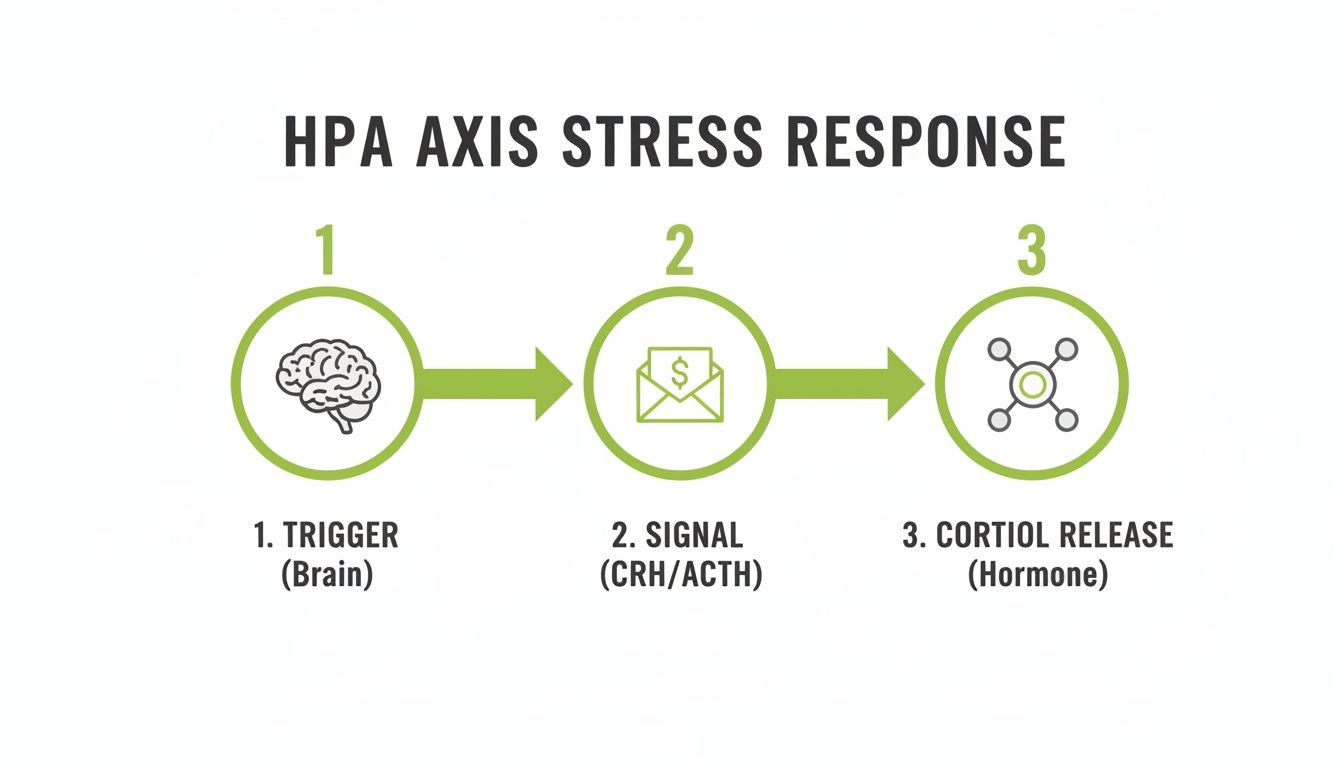
Mindful movement gives you a tool to consciously interrupt this cascade, down-regulating the system before cortisol has a chance to build up.
The Calming Power of Yoga
Yoga is a fantastic practice for managing cortisol because it weaves together physical postures (asanas), breath control (pranayama), and meditation. It's this powerful combination that excels at activating your parasympathetic nervous system—your body’s built-in relaxation response.
Holding poses helps release tension you might not even realize you're carrying in your muscles, while deep, rhythmic breathing sends a direct "calm down" message to your brain. It's not just theory; research consistently shows that a regular yoga practice leads to measurable drops in cortisol.
One study, for instance, followed individuals with depression through a three-month yoga program. The results? Their serum cortisol levels fell by over 12%.
The best part about yoga is that it’s for everyone. You don’t need to be a human pretzel to feel the benefits. A few simple, gentle poses can make a huge difference.
The real goal of yoga for stress relief isn't about nailing a perfect pose. It's about tuning into your body and your breath. That internal focus is what quiets a racing mind and brings cortisol back into balance.
A Gentle Yoga Sequence to Try Today
Here’s a simple, beginner-friendly sequence you can do right now to release tension. Try to hold each pose for 5-8 deep, slow breaths.
Cat-Cow Stretch: On your hands and knees, inhale as you drop your belly and look up (Cow pose). As you exhale, round your spine and tuck your chin to your chest (Cat pose). This is a great way to link your breath to movement and wake up your spine.
Child's Pose: From your hands and knees, sit back on your heels and fold forward, letting your forehead rest on the mat. This pose is incredibly grounding and has an immediate calming effect on the nervous system.
Downward-Facing Dog: Tuck your toes, lift your hips up and back, and form an inverted V with your body. You can gently "pedal" your feet by bending one knee then the other to stretch your hamstrings. This mild inversion helps relieve tension.
Legs-Up-The-Wall: This is a classic restorative pose. Lie on your back and scoot your hips as close to a wall as you can. Extend your legs straight up, resting them against the wall. It’s excellent for reducing fatigue and quieting the mind.
Combining these poses with focused breathing is the key. If you're interested in learning more ways to use your breath to manage stress, check out these practical breathing exercises for anxiety for more techniques.https://www.mindbreathapp.com/post/breathing-exercises-for-anxiety-a-practical-guide-to-finding-calm
Exploring Tai Chi and Qigong
If yoga isn’t your cup of tea, Tai Chi and Qigong are incredible alternatives. Both are ancient Chinese practices that center on slow, graceful movements, deep breathing, and a meditative focus. They’re often called "meditation in motion" for good reason.
Because they're so gentle, they're perfect for people of all ages and fitness levels.
Tai Chi: Typically practiced as a series of fluid, connected forms, Tai Chi is known to improve balance, flexibility, and mental calm.
Qigong: This practice focuses on aligning breath and movement to cultivate the body's vital energy, or "qi."
Research backs them up, too, showing both practices are effective at lowering stress and cortisol. Their slow, deliberate pace encourages you to be present, helping to break the cycle of anxious thoughts that can keep your system on high alert.
Beyond these specific practices, simply exploring various effective relaxation techniques for stress relief can make a big impact. The most important thing is finding something you actually enjoy. Consistency is what truly creates lasting hormonal balance and helps you build a more resilient response to whatever life throws your way.
How Nutrition and Sleep Control Cortisol
When it comes to lowering cortisol, what you eat and how you sleep aren't just details—they're the foundation. Think of these daily habits as the primary levers you can pull to directly influence your body's stress response system. If you get them right, you create a powerful feedback loop that naturally encourages hormonal balance.

Food is literally information for your body. The right nutrients send signals of safety and calm, while junk food can set off the internal stress alarm. In the same way, sleep is your body's dedicated time for critical maintenance, including hitting the reset button on your entire stress axis. Let either one slide, and cortisol can get stuck in the "on" position.
Building a Cortisol-Conscious Plate
A cortisol-friendly diet isn't about deprivation. It's about strategically adding in nourishing foods that help your system find its equilibrium. The two main goals here are to stabilize your blood sugar and reduce inflammation, because both of those are major triggers for a stress response.
Ever experienced that afternoon crash after a sugary lunch? When your blood sugar plummets, your body releases cortisol to bring it back up. This puts you on a hormonal rollercoaster and keeps your stress system on high alert.
Focusing on whole, nutrient-dense foods is the single most effective dietary strategy. These foods provide a steady stream of energy and the building blocks your body needs to manage stress effectively, preventing the hormonal chaos caused by processed items.
Here are the key players you want on your team:
Complex Carbohydrates: Think sweet potatoes, oats, and quinoa. These foods help your brain produce serotonin, a neurotransmitter that promotes a sense of well-being and helps counteract cortisol's edgy effects.
Omega-3 Fatty Acids: You'll find these in fatty fish like salmon, plus walnuts and flaxseeds. Omega-3s are potent anti-inflammatories. Since chronic inflammation is a huge physical stressor, these fats help lower cortisol by calming that fire.
Magnesium: I often call this "nature's calming mineral" for a reason. Magnesium is crucial for regulating the stress axis and keeping cortisol in check. Load up on leafy greens, avocados, bananas, and even a bit of high-quality dark chocolate.
Building meals around these foods gives your body the tools it needs to stay balanced. A proper diet doesn't just manage stress; it's also fundamental for keeping your engine running. You might find that understanding the deep connection between your https://www.mindbreathapp.com/post/energy-levels-and-heart-health-the-connection gives you even more motivation to stick with these changes.
Timing Your Food and Drinks
It's not just what you eat, but when you eat it. The timing of your meals, caffeine, and alcohol can have a surprisingly big impact on your cortisol rhythm.
Caffeine is a perfect example. It directly stimulates cortisol production. If you're already feeling wired, that morning coffee can pour fuel on the fire. My advice? Wait an hour or two after you wake up before having that first cup. Let your natural morning cortisol peak come and go on its own first.
Alcohol can be just as tricky. It might feel relaxing at first, but it often sabotages your sleep, leading to a cortisol spike during the night and into the next morning. If you're serious about managing stress, limiting alcohol—especially close to bedtime—is a must.
Prioritizing Sleep for Hormonal Reset
Sleep is non-negotiable for cortisol regulation. It's during those deep sleep cycles that your body repairs itself and your HPA axis gets a much-needed reset. If you're consistently getting less than seven to eight hours of quality shut-eye, your cortisol levels can become chronically elevated.
One study showed that even a single night of poor sleep can significantly spike cortisol levels the next evening. This kicks off a nasty cycle: high cortisol wrecks your sleep, and poor sleep raises your cortisol even more.
The way out is to create a consistent, relaxing bedtime routine. This sends a clear signal to your body that it's time to power down and helps re-establish a healthy cortisol rhythm—high in the morning to wake you up, and low at night so you can rest.
Getting deep, restorative sleep is critical, and some people find that simple tools can make a huge difference. You can explore the benefits of weighted blankets, which many find helpful for reducing nighttime anxiety and improving sleep quality.
Creating Your Sleep Sanctuary Checklist
You don't need a fancy setup. Transforming your bedroom into a true haven for rest is about making small, strategic changes that have an outsized impact on your sleep quality.
Try this simple checklist to optimize your environment:
Keep It Cool: A room temperature around 65°F (18°C) is often the sweet spot for promoting deep sleep.
Make It Dark: I mean really dark. Use blackout curtains or a good eye mask. Any light exposure can mess with melatonin production.
Eliminate Blue Light: Shut down all screens—phones, tablets, TVs—at least an hour before bed. The blue light they emit is a powerful signal to your brain that it's still daytime.
Create Quiet: If you live in a noisy area, a white noise machine or earplugs can be a game-changer for drowning out disruptions.
Establish a Routine: This is the big one. Go to bed and wake up at the same time every single day. Yes, even on weekends. Consistency is what trains your body's internal clock and regulates your cortisol rhythm for the long haul.
Tapping Into Nature and Creativity for Stress Relief
Diet and exercise are foundational, but some of the most potent tools for wrangling cortisol are the ones we tend to forget. Getting outside or losing yourself in a creative project can pull your body right out of a stressed state, sending a clear message to your nervous system: it's time to calm down.
This isn't just about finding a pleasant distraction. These are evidence-based strategies with a direct, measurable impact on your stress hormones.
The modern grind often traps us indoors, cut off from the very environment we evolved in. That constant separation can leave our stress response system simmering on low heat. Reconnecting with nature is a surprisingly simple way to turn that heat down.
The Science of Forest Bathing
The Japanese practice of Shinrin-yoku, or "forest bathing," is much more than a simple walk in the woods. It's about consciously immersing yourself in the forest, engaging all your senses. The sound of leaves, the smell of pine, the sight of sunlight breaking through the canopy—these things trigger a deep physiological relaxation response.
Research backs this up, showing that time in nature significantly lowers cortisol. It also slows your heart rate, lowers blood pressure, and even gives your immune system a boost. The best part? You don't need to plan a huge wilderness expedition to get these benefits.
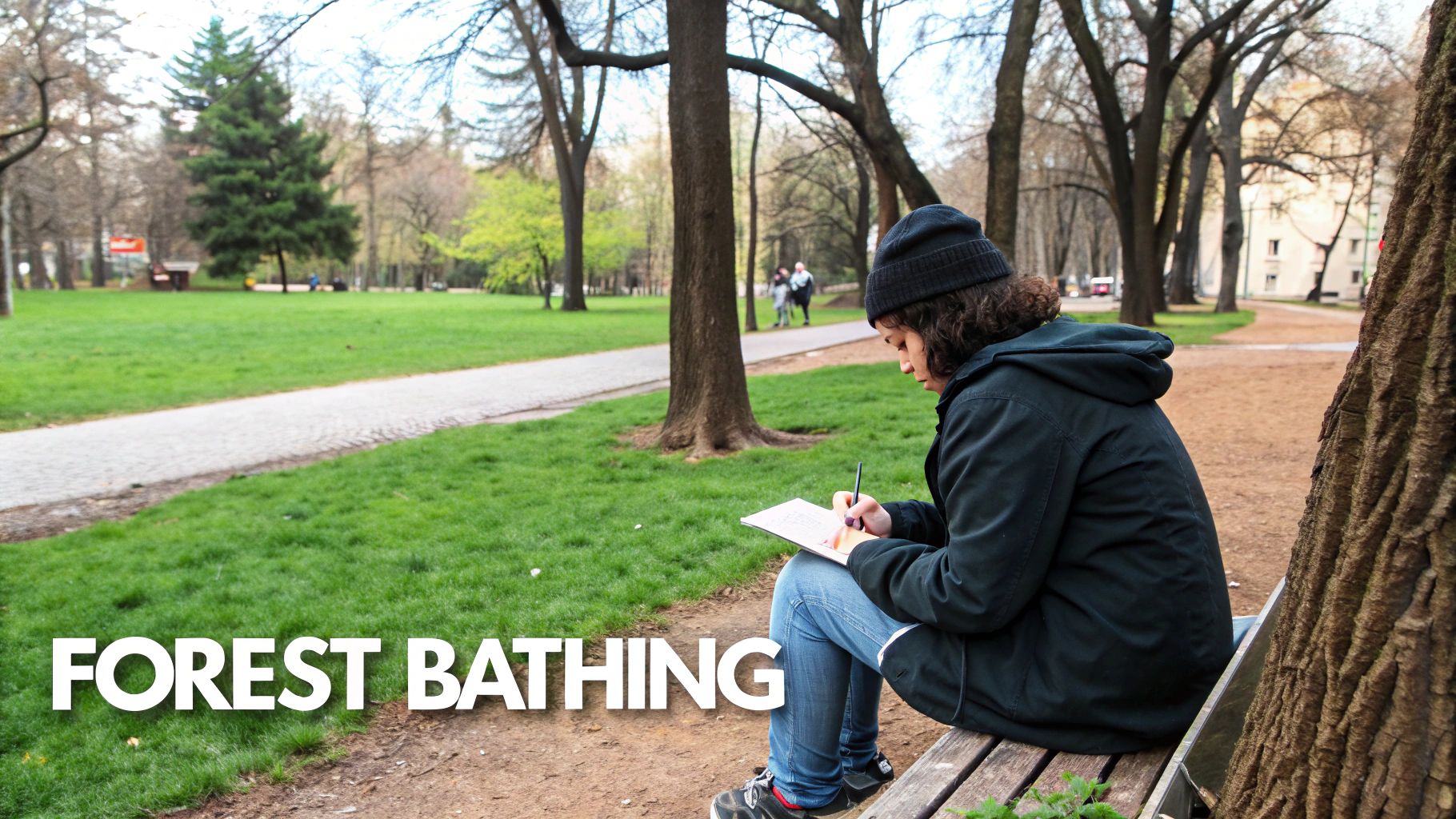
A quick 20-minute walk or even just sitting on a bench in a city park can be enough to start bringing your cortisol down. The trick is to be present and soak it all in, not just rush through on your way to the next thing.
This is something anyone can do, no matter where you live.
Find Your Green Spot: Look for a nearby park, a tree-lined street, or a quiet community garden.
Ditch the Distractions: Keep your phone tucked away. The goal is to connect with your surroundings, not your notifications.
Engage Your Senses: What do you see? Notice the different shades of green. What can you hear? Listen for birds or the wind. What do you smell? Breathe in the scent of the earth.
Making this a regular habit, even a couple of times a week, builds a powerful buffer against the daily grind. It’s a practical way to tell your body it's safe to power down.
Unleashing Your Inner Creativity to Reduce Cortisol
Here’s another incredibly powerful, but often overlooked, way to lower cortisol: creative expression. And no, you absolutely do not need to be an "artist" to benefit from this.
The simple act of creating something—whether it's drawing, journaling, coloring, or playing music—can shift you into a state of flow.
Flow is that amazing feeling of being completely absorbed in what you're doing. Time melts away, and your focus becomes singular. This mental state is the polar opposite of the scattered, anxious thinking that keeps cortisol levels high. When you’re in flow, the part of your brain responsible for worry and self-criticism (the prefrontal cortex) actually quiets down.
This calming effect is backed by solid research. Studies show that making art is a simple and effective way to lower cortisol, with measurable reductions seen in about 75% of participants. One study found that cortisol levels dropped significantly after just 45 minutes of art-making. You can dive into the specifics of these findings by reading the full research on art and cortisol reduction.
Simple Creative Exercises for Instant Relief
The barrier to entry here is practically non-existent. You don’t need a fancy studio or expensive supplies. It's all about the process, not the product.
Here are a few five-minute creative exercises anyone can try:
Mindful Doodling: Grab a pen and paper. Just let your hand move across the page, making lines, shapes, and patterns without a goal. Focus on the feeling of the pen meeting the paper.
Coloring: There's a reason adult coloring books are so popular. The repetitive motion and the simple act of choosing colors are incredibly meditative and can quickly dial down anxiety.
One-Sentence Journaling: Feeling swamped? Open a notebook and write a single sentence that captures how you feel. Just getting that thought out of your head and onto the page can bring immediate relief.
By weaving small doses of nature and simple creative acts into your life, you add two more incredibly effective tools to your cortisol-management toolkit. These practices not only help balance your nervous system in the moment but also build long-term resilience against stress.
Building a Lifestyle for Lasting Cortisol Balance
While breathing exercises give you incredible in-the-moment relief, the real secret to keeping stress hormones in check is building a lifestyle that supports cortisol balance long-term. This isn't about grand gestures. It's about the small, consistent daily choices that add up to fundamentally change how your body responds to stress.
Think of it as building a foundation of resilience. This framework rests on pillars that too many of us overlook: strong social bonds, genuine laughter, and hobbies that truly absorb you. These aren't just nice-to-haves; they are powerful biological buffers against stress, signaling to your HPA axis that you are safe and supported.
Cultivating Connections and Joy
As humans, we're fundamentally wired for connection. Meaningful relationships with friends and family are absolutely crucial for both mental and hormonal health. When you feel a true sense of belonging, your body ramps up production of oxytocin, a hormone that directly counteracts cortisol and brings on feelings of calm and security.
Laughter is another surprisingly potent tool. A good, hearty laugh isn't just fun—it increases your oxygen intake, stimulates your organs, and actively cools down your stress response. The result is a measurable drop in cortisol levels.
Schedule Social Time: Be as intentional about connecting with loved ones as you are with a work meeting. Put that weekly call with a friend or a family dinner on your calendar.
Find Your Joy: Re-engage with an old hobby or find a new one. Whether it’s gardening, playing an instrument, or joining a book club, losing yourself in an enjoyable activity is a fantastic way to dial down stress.
Building a life rich with positive social interactions and activities you genuinely enjoy isn't an indulgence—it's a core component of any effective strategy to reduce cortisol levels for good.
The Non-Negotiable Power of Boundaries
One of the biggest drivers of chronic stress today is the constant blurring of lines between work, personal time, and rest. Without firm boundaries, you're essentially leaving your stress response system switched on 24/7. Learning to say "no" isn't selfish; it’s an act of self-preservation and a critical skill for hormonal health.
Setting boundaries means clearly defining what you will and won't accept for your time and energy. This might look like not checking work emails after 6 p.m., dedicating Sunday as a true day of rest, or politely declining social invitations when you feel stretched thin. Each boundary you set sends a powerful signal of safety to your nervous system.
Recalibrating Your System with Mindful Walking
Beyond traditional exercise, mindful walking offers a unique way to actively down-regulate your stress response. This isn't a power walk focused on heart rate; it's a practice of pure sensory awareness. It’s about paying full attention to the act of walking and your surroundings, whether you’re on a bustling city street or a quiet nature trail.
This simple practice bridges the gap between movement and meditation, helping to recalibrate your nervous system. We know from research that spending time in nature has a profound effect on stress hormones. In fact, studies show that mindful walking in a natural setting can significantly lower long-term cortisol exposure. One study found that individuals who regularly walked in a forest had substantially reduced hair cortisol concentrations compared to those walking in an urban environment. You can dig into the findings on nature's buffering effects on stress yourself.
Here's a simple way to get started with mindful walking:
Start Slow: Begin walking at your own natural, unhurried pace.
Focus on Your Feet: Pay close attention to the sensation of your feet connecting with and leaving the ground. Feel the texture of the pavement or the earth beneath you.
Engage Your Senses: Shift your awareness to what's around you. Notice five things you can see, four things you can feel (like the breeze on your skin), three things you can hear, two things you can smell, and one thing you can taste.
Gently Return: Your mind will wander. That’s okay. When it does, just gently guide your focus back to the physical sensations of walking or your environment.
This is an incredibly simple and accessible practice you can do anywhere, anytime. By integrating social connection, firm boundaries, and mindful movement into your daily life, you create a sustainable framework that not only lowers cortisol but also builds a more resilient, balanced, and joyful existence.
Got Questions About Cortisol? We've Got Answers.
As you start putting these strategies into practice, you're bound to have a few questions pop up. That’s completely normal.
Here, we'll tackle some of the most common things people ask about lowering cortisol, from how long it really takes to see changes, to whether those at-home tests are worth it, and how to navigate the world of supplements without getting overwhelmed. Think of this as your practical FAQ to keep you on the right track.
How Long Does It Take to Lower Cortisol?
This is the big one, and the answer really has two parts.
You can feel a difference almost immediately. Seriously. Techniques like paced breathing or stepping outside for a quick walk can knock down an acute cortisol spike in just a few minutes, giving you that instant feeling of calm when you're in the thick of it.
But for chronically high cortisol, we're playing the long game. Lasting change comes from consistency. By dialing in your sleep, moving your body mindfully, and eating well, you’ll likely start to notice real improvements in your mood, energy, and sleep within a few weeks. To see a meaningful, physiological shift in your baseline cortisol levels, you’ll want to give it a solid 1-3 months of consistent effort.
Are At-Home Cortisol Tests Accurate?
At-home kits, which usually use saliva or a blood spot, can be a fascinating tool. They can give you a snapshot of your daily cortisol rhythm—that natural morning peak and the slow decline throughout the day. They can certainly be useful for tracking your own trends over time.
However, their accuracy hinges on a lot of things, like collecting the sample perfectly and the quality of the lab doing the analysis.
Think of at-home tests as a single data point, not a diagnosis. They're best used to inform a conversation with your doctor or a health professional, helping you monitor progress from the lifestyle changes you're making—not to self-diagnose a medical condition.
What Are the Best Supplements for Reducing Cortisol?
Walking into the supplement aisle can feel like stepping into a maze. When it comes to stress and cortisol, a class of herbs called adaptogens gets a lot of attention for their ability to help the body, well, adapt to stress.
A few of the most researched ones include:
Ashwagandha: A classic herb from Ayurvedic tradition known for helping the body manage stress; studies have shown it can reduce cortisol concentrations.
Rhodiola Rosea: Another powerful adaptogen that can help build resilience against both physical and emotional stressors.
L-theanine: This is the amino acid in green tea that gives you a calm, focused feeling without making you sleepy.
Phosphatidylserine: A compound that has shown real promise in blunting the cortisol spike that comes with acute stress.
This is critical: Always talk to your doctor before starting any new supplement. They can interact with medications you're already taking and aren't right for everyone. A healthcare provider can help you figure out if a supplement makes sense for you and guide you toward a safe and effective dose.
Ready to see how your breathing impacts your stress in real time? The Mindbreath app uses your phone's camera to measure your Heart Rate Variability (HRV) and provides live biofeedback on over 100 guided exercises. Take the guesswork out of relaxation and start building a more resilient nervous system today. Download it here: https://www.mindbreathapp.com
Article created using Outrank
Comments